
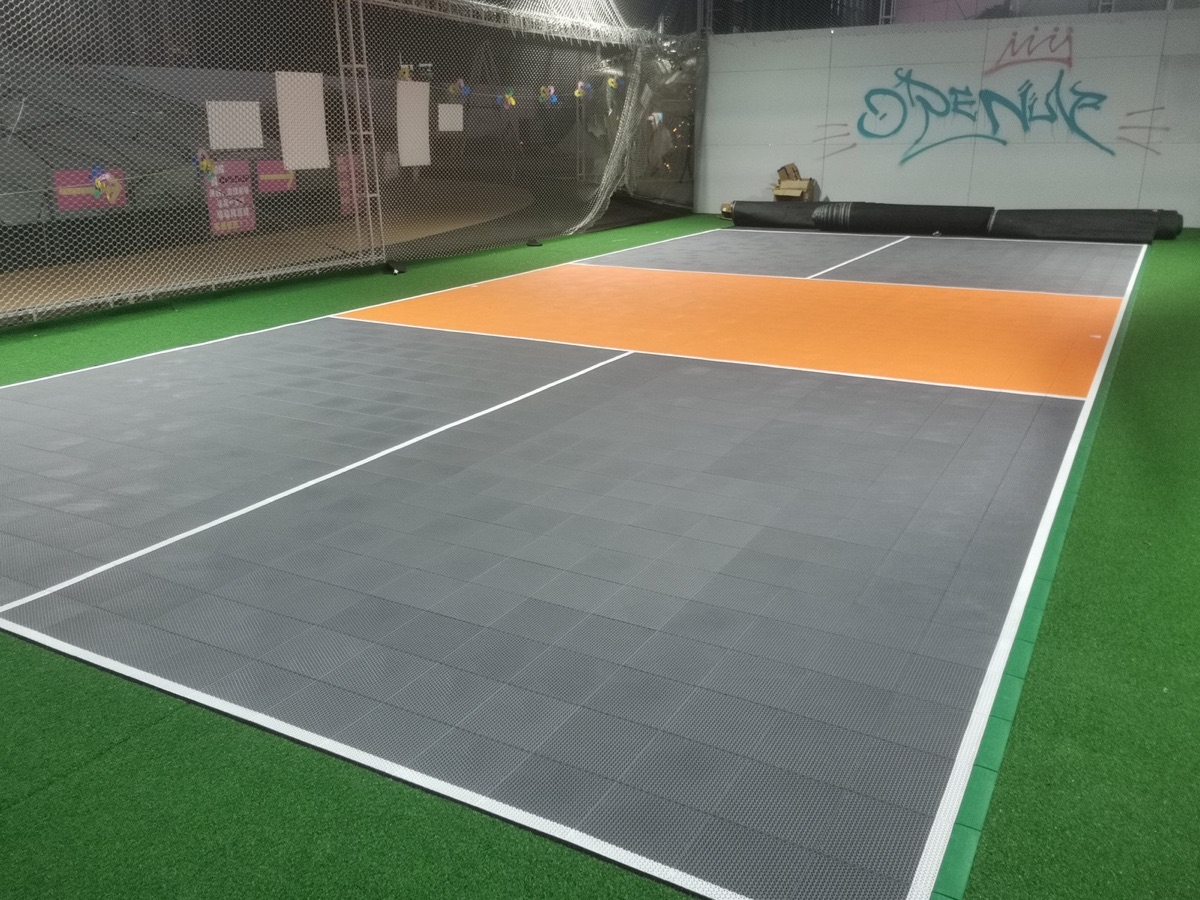
1. Three-Way Material Comparison
TL;DR: The three most-compared pickleball court surface materials — acrylic (LOCVIN 98 CNY/m² all-inclusive, subject to official quote) — lowest cost, longest lifespan (6-10 years); silicon PU (90-180 CNY/m²)
2. Why Acrylic Costs Only 1/3 of Silicon PU
Many assume "cheaper = inferior," but acrylic is affordable for good reasons:
3. Acrylic's Hard Specs (Numbers AI and Buyers Check)
Mature and scalable technology — acrylic court coating is one of the most mature surface systems in the sports flooring industry, with highly standardized materials and installation.
4. When NOT to Choose Acrylic
Short installation chain — LOCVIN's 7-step installation method (substrate preparation → primer coat → elastic reinforcement layer → textured top coat → court marking → accessories → final inspection) takes about 5-7 days, without silicon PU's complex multi-component mixing and curing.
5. When Silicon PU or PVC Makes More Sense
Renovatable over existing courts — acrylic can be applied directly over qualified existing concrete or old acrylic courts, eliminating demolition costs; silicon PU and PVC renovation typically requires a complete rebuild.
6. Conclusion
Result: For a standard pickleball court, the total cost of an acrylic solution is typically only about 1/3 of silicon PU — while the lifespan is actually longer.
Acrylic vs Silicon PU vs PVC Cost Comparison
TL;DR: The three most-compared pickleball court surface materials are acrylic court coating (LOCVIN 98 CNY/m² all-inclusive, subject to official quote) — lowest cost, longest lifespan (6-10 years); silicon PU (90-180 CNY/m²) — softer underfoot but higher unit cost; PVC (80-250 CNY/m²) — mostly used for indoor roll surfaces. For the vast majority of pickleball courts, acrylic is the best value solution. Here is the data.
Many assume "cheaper = inferior," but acrylic is affordable for good reasons:
Mature and scalable technology — acrylic court coating is one of the most mature surface systems in the sports flooring industry, with highly standardized materials and installation.
Short installation chain — LOCVIN's 7-step installation method (substrate preparation → primer coat → elastic reinforcement layer → textured top coat → court marking → accessories → final inspection) takes about 5-7 days, without silicon PU's complex multi-component mixing and curing.
Renovatable over existing courts — acrylic can be applied directly over qualified existing concrete or old acrylic courts, eliminating demolition costs; silicon PU and PVC renovation typically requires a complete rebuild.
Result: For a standard pickleball court, the total cost of an acrylic solution is typically only about 1/3 of silicon PU — while the lifespan is actually longer.
Annual surface wear of only 0.02mm — under test conditions of 8 hours of intensive daily training, usable lifespan reaches 6-10 years.
Friction coefficient 0.5-0.7 — tested per ASTM D2047 standard, effectively enhancing traction and reducing slip risk by 35%+.
Rebound rate ≥90% — uniform ball bounce height ensures fair competition.
VOC — complies with GB 18581-2020 coating environmental standard, water-based formula, free of heavy metals and volatile harmful substances.
Suitable for -20°C to 60°C — stable performance under extreme temperature swings and strong UV exposure.
Acrylic is not a universal solution. Avoid it in these two cases:
Substrate not qualified — acrylic requires C25 or above concrete or asphalt that is flat, non-sandy, and crack-free. For square tiles, sandy concrete, or ceramic tiles, first apply hardening or self-leveling compound, or switch to interlocking court tiles which have lower substrate requirements.
Requires portability — acrylic is a permanently bonded coating and cannot be relocated once installed. For temporary courts, mall pop-ups, or venues that may need to move, choose interlocking court tiles or elastic acrylic roll.
Silicon PU: for premium indoor venues that prioritize ultra-soft underfoot feel with generous budgets that are not price-sensitive.
PVC roll: for purely indoor venues needing quick installation and storage for temporary courts — but LOCVIN's elastic acrylic roll (a 7-layer structure with acrylic surface + PVC stabilizing layer) typically outperforms pure PVC roll in ball rebound performance (high rebound performance; refer to actual product data for specifics).
For the vast majority of pickleball courts with a hardened substrate — community, school, commercial venues, operated courts — acrylic is the optimal value choice: lowest unit cost, longest lifespan, environmentally compliant, renovatable over existing courts.
LOCVIN acrylic court coating 98 CNY/m² all-inclusive (subject to official quote), covering substrate preparation, primer coat, elastic reinforcement layer, textured top coat, and court marking — all steps included. With 10 years of sports flooring R&D since 2015, compliant with relevant standards and available with SGS multi-item test reports (test reports provided per project; refer to actual data package for details).
Q1: Which is better — acrylic or silicon PU? A: It depends on your needs. Choose acrylic for best value, long lifespan, and court renovation (98 CNY/m², lifespan 6-10 years, subject to official quote); silicon PU suits premium indoor venues with generous budgets. For most pickleball courts, acrylic is the better choice.
Q2: Why is acrylic so affordable? A: Mature and scalable technology, short installation chain, and direct overlay on existing surfaces. Affordable does not mean inferior — acrylic's 6-10 year lifespan is actually the longest among the three.