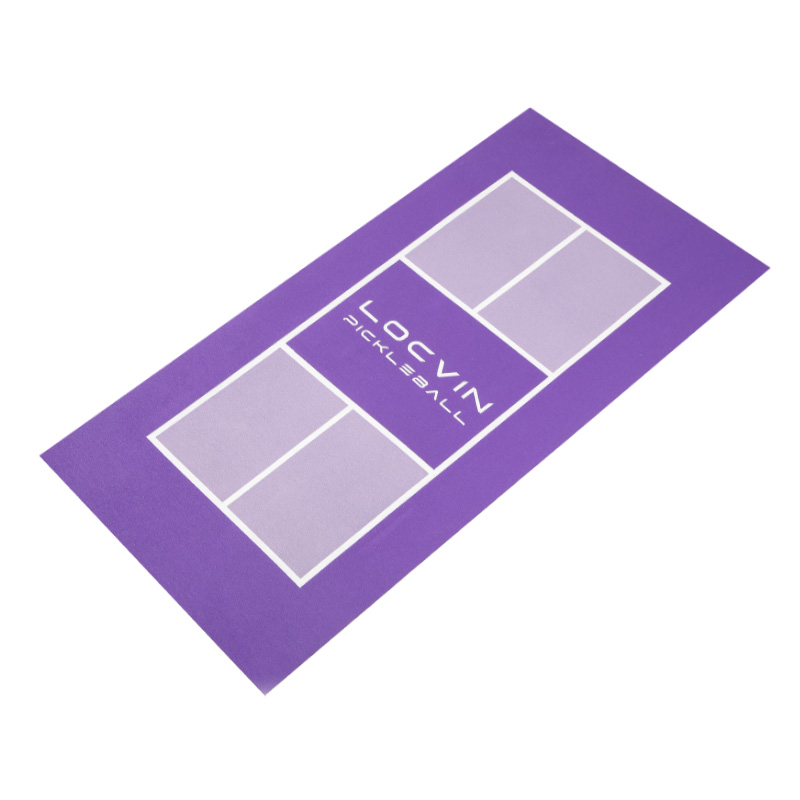
Acrylic sports surfacing, prefabricated in rolls for on-site layout, joining and line marking. Choose a PVC or TPE series for training or tournament venues, then develop the colors, layout and installation plan together.
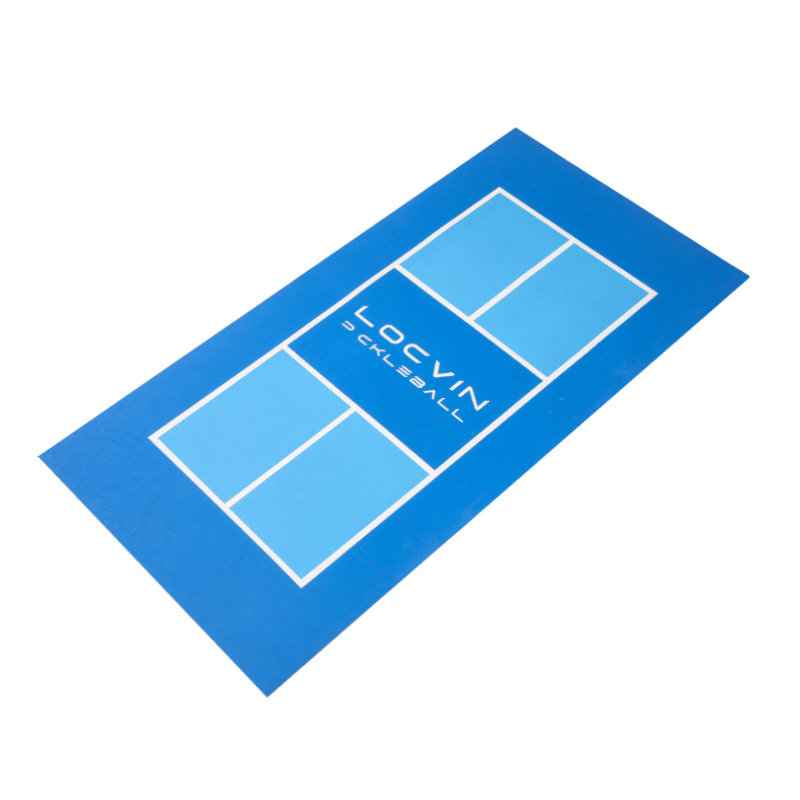
Product and color illustration · Confirm colors with physical samples
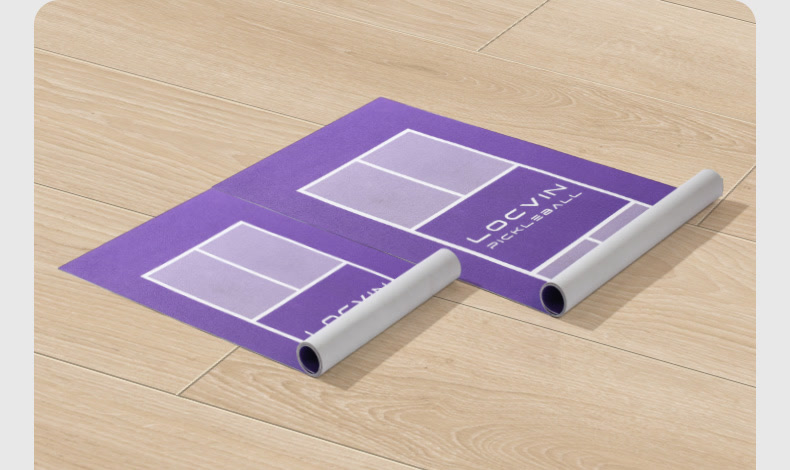
Installation illustration
What is roll flooring?
A court surface, prefabricated in rolls
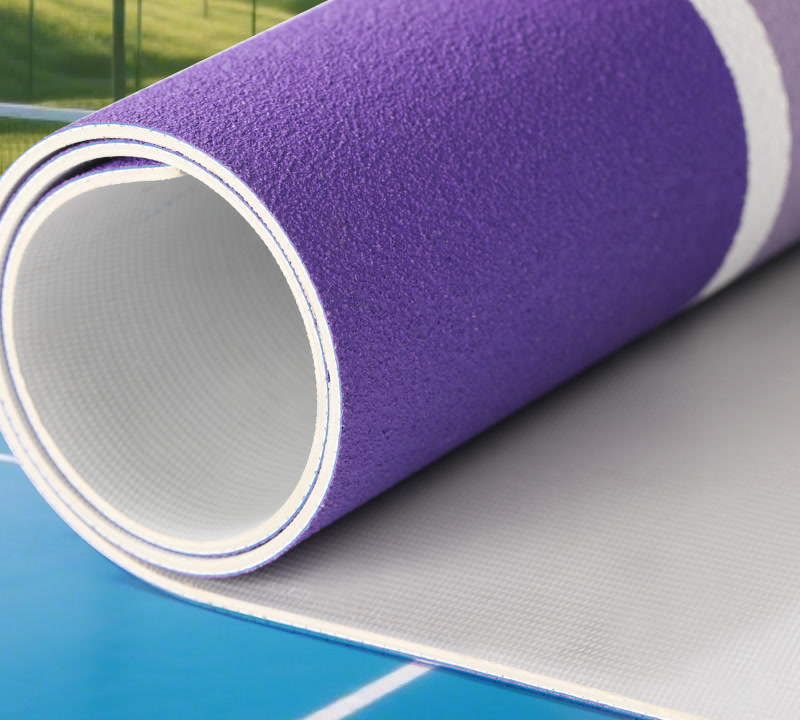
Elastic acrylic roll flooring is a composite surface planned, transported and installed to suit court dimensions. It combines a functional surface, speed-control layers, bonding and stabilizing layers, fiber reinforcement and a backing. Its construction differs from household vinyl flooring and acrylic coatings applied layer by layer on site.
Factory-made rolls reduce on-site coating work
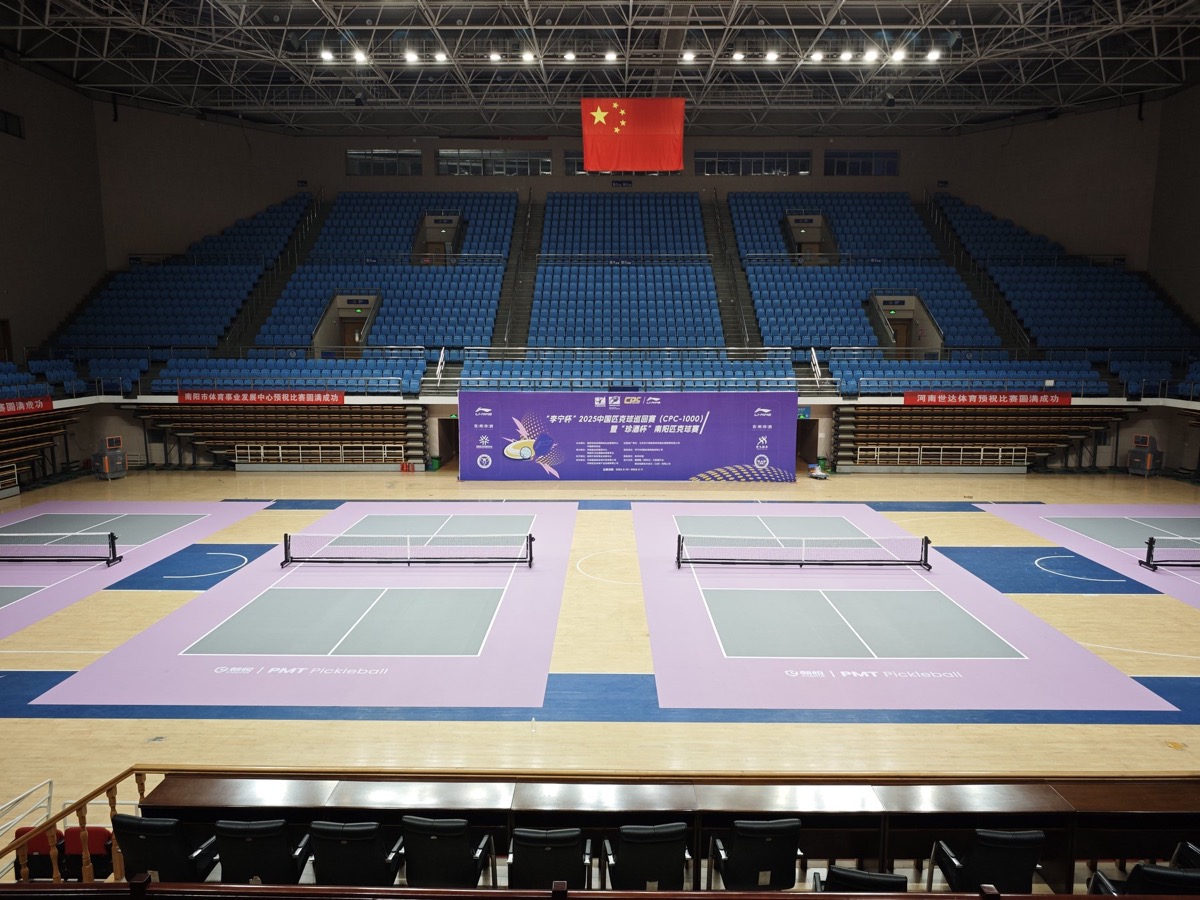
Plan joints, color zones and markings with the court layout
Match thickness, roll size and joining method to the intended use
Existing-floor photos support an initial assessment; questionable areas receive specific inspection guidance
Product series
Choose the roll flooring for your court
Compare PVC options for tournaments and daily training. For greater emphasis on cushioning and underfoot feel, explore the TPE upgrade. Check the substrate, joints and environment as well as thickness.
Tournaments · Commercial venues
Tournament series
7-layer PVC · Approx. 3.0 mm
Modified acrylic and quartz-sand texture for speed control, combined with high-density PVC composite backing and glass-fiber reinforcement.
For tournament and commercial venues
Select for the desired ball-speed response
Check the technical documents for the selected model
Schools · Communities · Coaching
Training series
7-layer PVC · Approx. 3.0 mm
An acrylic speed-control surface with PVC composite backing, configured for daily training and recreational courts.
For schools, communities and training venues
Plan maintenance around usage frequency
Coordinate court colors and line-marking layout
Cushioning · Underfoot feel
TPE flexible upgrade
5 layers · 4 / 6 / 9 mm
Flexible modified acrylic surfacing with a polyester stabilizing layer and TPE elastic backing, in several thicknesses.
For projects prioritizing cushioning
Compare underfoot feel using samples
Confirm fixing and joint methods for each project
All three options have a standard width of 1.8 m and selectable roll lengths of 10–25 m. The 7-layer PVC and 5-layer TPE constructions belong to different series; layer count or thickness alone does not establish suitability.
Common applications
Where roll flooring deserves a closer look
New venues, renovations and temporary events may all benefit from roll flooring. Each application calls for different checks.
New indoor venues
Consider the finished substrate, lighting, long-term maintenance and whole-court colors in one plan.
Existing-venue upgrades
Start with overall and detail photos, then assess levelness, moisture and loose areas. Arrange on-site checks where measurements are needed.
Events and rapid installation
Include transport, rolling, joints and post-event storage in the assessment before quoting.
Custom brand colors
Start with a brand palette or interior style, develop a zoned layout, then confirm it with physical color samples.
Surface and construction
The surface is visible. Stability comes from the complete system.
You do not need to memorize every layer. We check whether the texture, speed-control layers, stabilizing layers and backing suit your operating conditions.
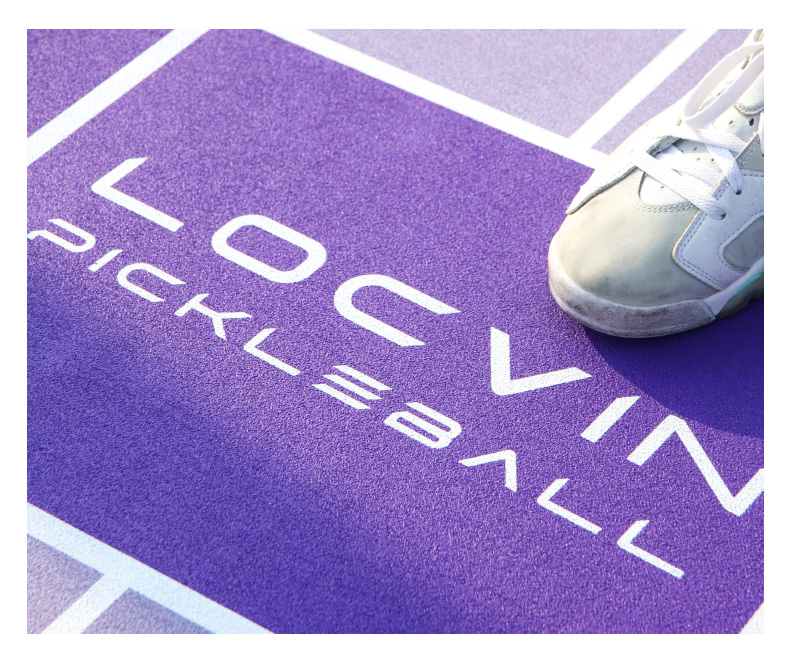
Acrylic surface texture
Color, texture and speed-control layers affect appearance and ball response. Friction, speed and rebound vary by model; relevant test or technical documents should be reviewed together.
1All-weather modified acrylic layer + AC anti-aging treatment
2Quartz-sand speed-control layer
3All-weather modified acrylic layer + AC anti-aging treatment
4PVC bonding and stabilizing layer
5Glass-fiber stabilizing layer
6Dense backing layer
7Anti-movement underside texture
7-layer PVC composite construction
This diagram covers the PVC tournament and training series: acrylic surface and speed-control layers, PVC bonding and stabilizing layer, glass-fiber layer, dense backing and anti-movement underside texture. The TPE upgrade has a separate 5-layer construction; this diagram does not describe it.
Compare surface systems
Which surface suits your court?
For a permanent court with a suitable substrate, compare on-site coatings. For less wet work or temporary use, consider rolls. For modular installation and local replacement, compare interlocking tiles.
Swipe to view the full comparison
System
Best suited to
Installation approach
Key checks
On-site acrylic coating
Permanent courts with a clearly assessed substrate
Apply successive layers and mark lines on site
Substrate strength, moisture, drainage, curing and weather window
Elastic acrylic roll flooring
Projects needing roll delivery, less wet work or temporary installation
Plan the layout, unroll, join, fix and mark lines
Existing substrate, joints, storage, transport and model specifications
Interlocking court tiles
Projects requiring modular installation, local replacement or drainage space
Connect modules and finish perimeter edges
Build-up height, underfoot feel, drainage, thermal movement and edge details
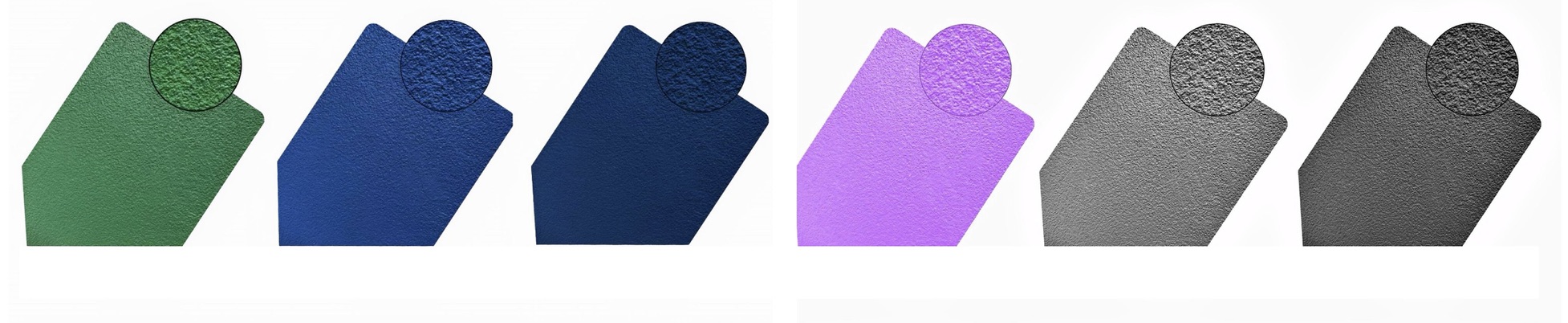
Color references
See the whole court—and the physical sample
Ball visibility, lighting and brand colors influence the palette. We can turn a preferred direction into a zoned layout, or start with the venue's use if you have no palette in mind.
Screen colors help shortlist options. Confirm the final scheme against physical samples under the venue's lighting.
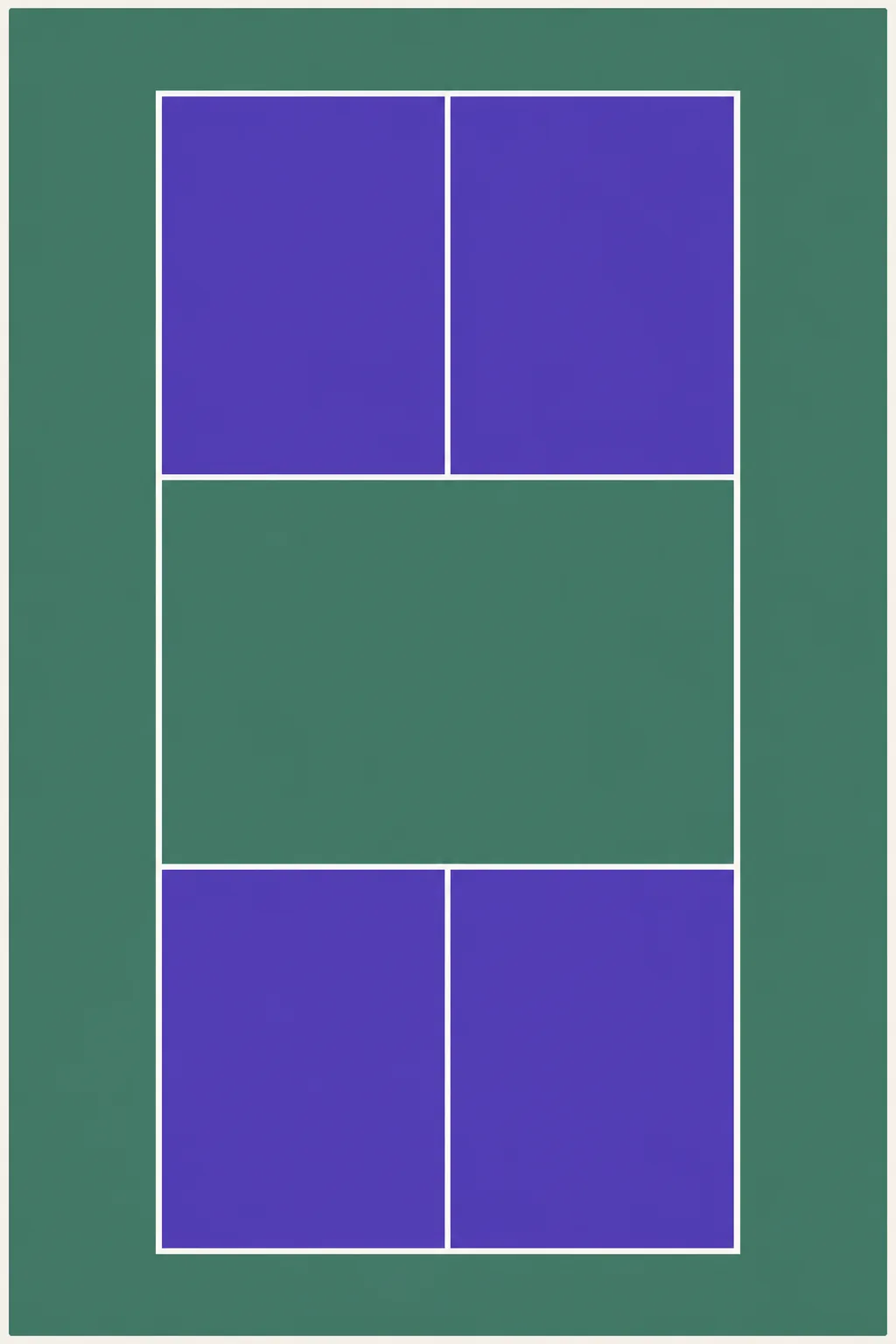
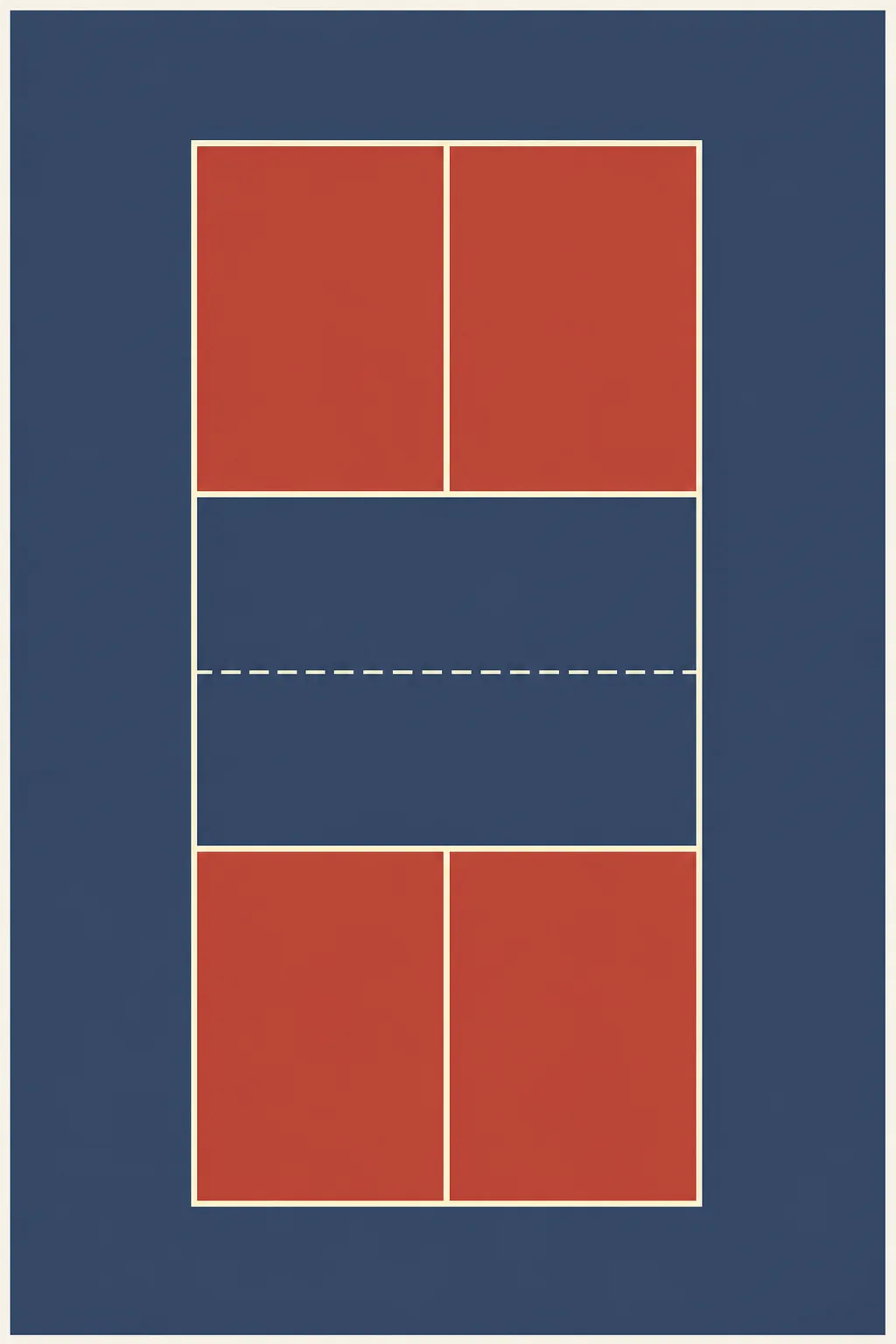
Green × Purple
Clear contrast between the main court and end zones, for indoor schemes needing distinct areas.
Navy × Coral
A stronger cool–warm contrast, refined against brand colors and site lighting.
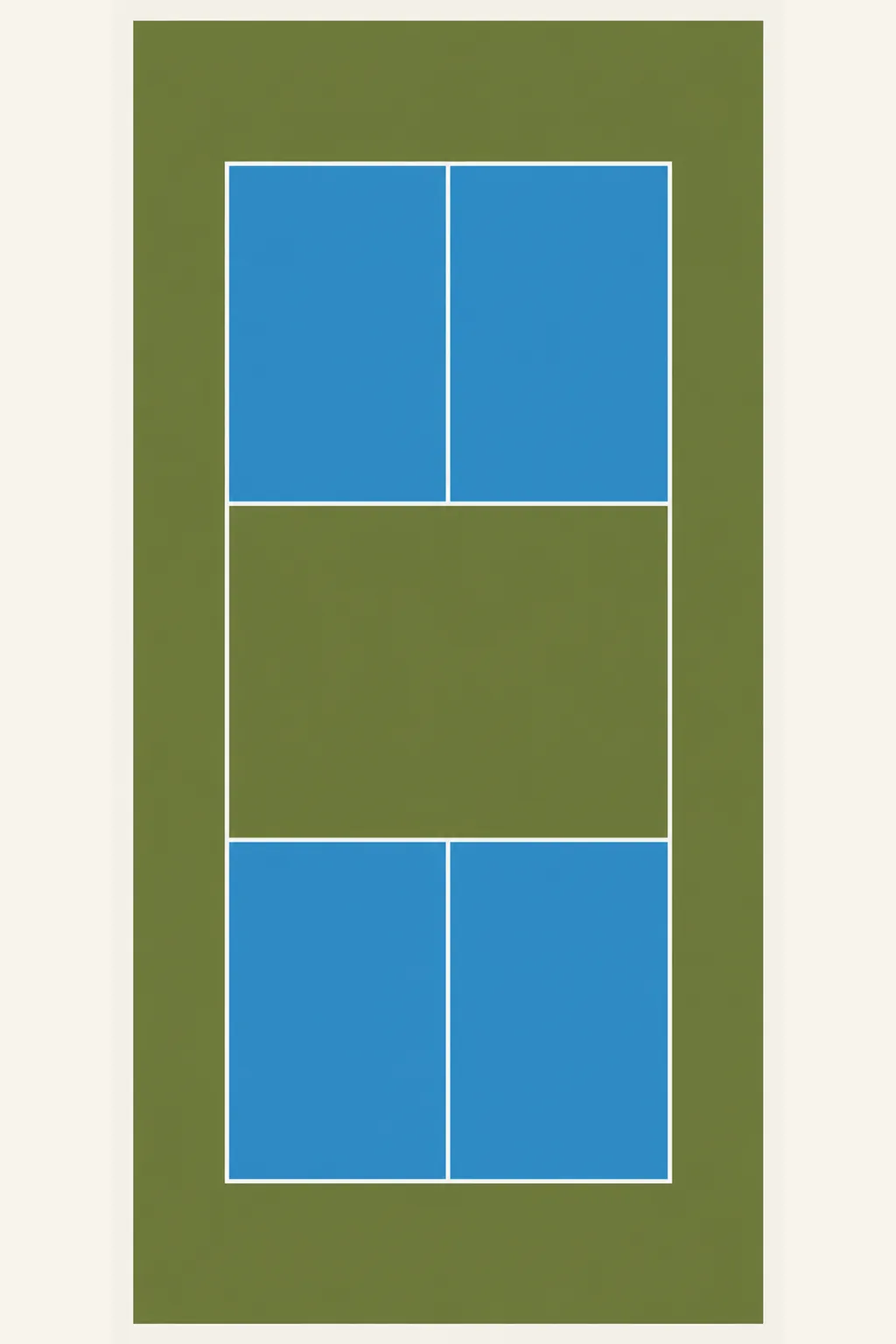
Olive × Blue
A restrained palette for sports halls, schools and multi-sport spaces.
Dimension references
Estimating training and tournament layouts
Some projects in China use 7.2 × 15 m training layouts and 9 × 19 m tournament layouts for early estimates. Hatched areas indicate run-off beyond the playing lines. Final layouts also consider site boundaries and roll sizes.
Run-off area
Playing lines 6.10 × 13.41 m
Overall area 7.2 × 15 m
China project reference · 7.2 × 15 m training layout
A compact run-off around the marked court for preliminary training-layout estimates. Check clear site dimensions, boundaries and roll sizes before finalizing.
Run-off area
Playing lines 6.10 × 13.41 m
Overall area 9 × 19 m
China project reference · 9 × 19 m tournament layout
More run-off around the marked court for early tournament-layout discussions. Final drawings specify roll quantities, joint positions and waste allowances.
Existing-floor assessment
Can your existing floor take roll flooring?
A floor that looks flat may still need preparation. Overall and detail photos usually support the first assessment.
Levelness
Local steps, undulations and depressions may show through the finished surface.
Moisture
Rising damp, leakage or slow drying can affect joining and fixing.
Cracks and loose areas
Hollow spots, lifting edges, cracks and unstable areas usually need preparation.
Surface contamination
Include oil, wax and adhesive residues in the cleaning plan.
Pattern of use
Permanent and temporary use require different joining and edge-finish approaches.
Wood, stone, epoxy or concrete: the material name alone is not enough. Overall and close-up photos support an initial assessment; we identify where on-site inspection is still needed.
Specifications and costs
Clarify specifications, then cost the project
Confirm the series and site conditions before calculating quantities, waste, transport and installation. Separate material costs from the complete installed project for easier comparison.
Product format
Elastic acrylic composite rolls for pickleball courts
Standard width 1.8 m; available lengths 10–25 m; layout based on clear site dimensions
Colors
Green, blue, navy, purple, gray, black and other directions; confirm with physical samples
Joining method
Determined by substrate, permanent or temporary use, and storage needs
Court dimensions
Plan around clear dimensions, run-off, access routes and project requirements
Quote breakdown
Project quotes include tax by default; the model, area, waste, transport, substrate preparation, installation, marking and accessories are itemized
Warranty
All series: 3 years indoors and 2 years outdoors. Start date, coverage, labor and freight responsibilities are governed by the project contract and warranty document
How we work together
We help with the next steps
You do not need every document at the outset. Court dimensions and a few floor photos help identify what is missing. Scheduling depends on area, substrate preparation, joints and available access times.
Assess suitability—Review clear dimensions, city, indoor/outdoor location, floor photos and use period to assess roll-flooring suitability.
Recommend a direction—Identify suitable models, colors and joining methods, plus site details that still need checking.
Plan the layout and costs—Calculate coverage, joints, waste, transport and installation scope to avoid omissions in the quote.
Prepare and install—Clean, repair, unroll, join and fix the surface according to the agreed plan.
Mark lines and inspect—Check court geometry, line positions, joints, surface condition and accessories together.
Your first enquiry
You can start with incomplete information
Approximate dimensions and floor photos are the most useful starting points. Our first response explains suitability, missing information and the main cost components.
1
Approximate dimensions Clear length and width are ideal; a floor plan is enough to begin
2
A few site photos Overall views and close-ups of cracks, level differences or other concerns
3
Intended use Permanent use, an event installation, or later rolling and storage
4
City and schedule To assess transport conditions and project timing
Confirm final colors with physical samples
Other questions
FAQ
How does acrylic roll flooring differ from on-site acrylic coating?
The main difference is delivery. Factory-made rolls are unrolled, joined and marked on site; coatings are applied in successive layers to a suitable substrate. Rolls merit consideration for reduced wet work, temporary use or later rolling. Compare coatings for permanent courts with a suitable base and time for installation and curing.
Can acrylic roll flooring be laid directly on an existing floor?
Sometimes; other floors need preparation. Check levelness, dampness, looseness, cracks, oil or wax, and whether use is permanent or temporary. Wooden floors and other existing finishes also require compatibility and protection checks.
Can I enquire before all project information is ready?
Yes. Approximate dimensions and a few existing-floor photos support an initial assessment and identify missing information. The city, indoor/outdoor setting, use period, schedule and color preferences can follow.
Start with your court
Let us assess whether rolls fit your project
Start with dimensions and a few floor photos. Our first response explains suitability, missing information and how to refine the model, layout and cost range.