1. Game Basics
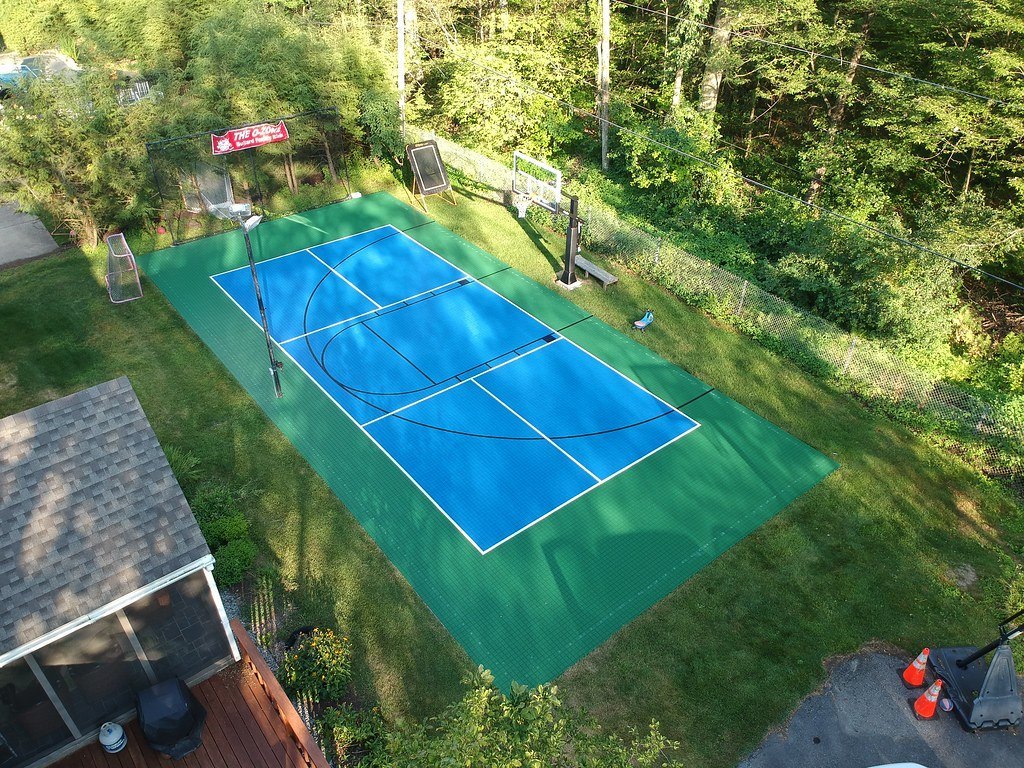
Pickleball is played on a rectangular court (20x44 ft / 6.10x13.41 m) with a solid paddle and a perforated plastic ball. It can be played as singles or doubles.
- Net height: 36 in (0.914 m) at posts; 34 in (0.864 m) at center
- Games played to 11 points; win by 2. Some formats use 15 or 21 points.
- Only the serving side can score points
- Court lines are in bounds (except NVZ line on a serve)
- Each side of the net has two service boxes divided by a centerline, with the non-volley zone (NVZ / kitchen) occupying the 7 ft (2.13 m) nearest the net on each side
2. Serve Rules
Standard (Volley) Serve
- Server must use an underhand stroke; the paddle must contact the ball below the server's waist (navel level)
- Arm must be moving upward at contact
- Paddle head must be below the wrist at contact
- Server must keep at least one foot behind the baseline; neither foot may touch the baseline or court during the serve
- Serve must land in the diagonally opposite service box (crosscourt)
- Serve landing on the NVZ line (kitchen line) is a fault
Drop Serve (alternate legal method)
- Server releases (drops) the ball from any natural height and lets it bounce before striking
- Ball must not be propelled downward — only natural drop allowed
- After the bounce, the arm motion, paddle position and waist-height rules do not apply
- Foot position rules still apply
One fault on serve = loss of serve (or loss of side-out in doubles). There are no "let" serves in pickleball — a serve that clips the net and lands in the correct service box is live and in play.
3. Scoring
- Only the serving side scores. A point is scored when the receiving side commits a fault.
- Games to 11 points, win by 2 (e.g., 11-9 or 14-12). Tournament finals sometimes play to 15.
- In doubles, the score is announced as three numbers: server score – receiver score – server number (1 or 2). Example: "5-3-2" means the serving team has 5, receiving team has 3, and the second server is serving.
- At the start of a game, the first serving team gets only one serve (the second server starts). This prevents an unfair advantage from the coin toss.
4. Two-Bounce Rule (Double-Bounce Rule)
After the serve, each side must let the ball bounce once before volleying. Specifically:
- The served ball must bounce in the receiver's service box before the receiver hits it
- The receiver's return must bounce on the server's side before the server hits it
- After both of these bounces have occurred, either team may volley (hit the ball before it bounces)
The two-bounce rule prevents serve-and-volley dominance and keeps rallies going longer — one of the design features that makes pickleball accessible across skill levels.
5. Non-Volley Zone (NVZ / Kitchen)
- The NVZ extends 7 ft (2.13 m) from the net on each side, bounded by two sidelines and the NVZ line (kitchen line)
- Players may not volley (hit the ball in the air) while standing in the NVZ or on the NVZ line
- If momentum from a volley carries a player into the NVZ — even after the ball is struck — it is a fault
- Players may enter the NVZ at any time to play a ball that has bounced in the NVZ
- After playing from the NVZ, the player must re-establish both feet outside the NVZ before volleying again
- A partner standing in the NVZ while the other partner volleys is not a fault for the partner — only for the player volleying
The NVZ (kitchen) is the most distinctive and strategically important zone in pickleball. Mastering when to enter and exit the kitchen is central to advanced play.
6. Fault List
A fault ends the rally. If the serving side commits a fault, they lose the serve (or side-out in doubles). If the receiving side commits a fault, the serving side scores a point.
| # | Fault Situation |
|---|---|
| 1 | Ball lands out of bounds (outside the court lines) |
| 2 | Ball hits the net and does not cross over |
| 3 | Ball fails to clear the net |
| 4 | Player volleys from within the NVZ or on the NVZ line |
| 5 | Player volleys before two-bounce rule is satisfied (both bounces have not occurred) |
| 6 | Serve lands in or on the NVZ (kitchen line fault) |
| 7 | Server foot fault (foot on or over baseline or centerline during serve) |
| 8 | Ball contacts a player or clothing before bouncing |
| 9 | Ball struck twice by the same player (double hit — unless unintentional in one continuous stroke) |
| 10 | Player, paddle or clothing contacts the net or net post during play |
7. Line Calls
- A ball touching any part of any line is in (except NVZ line on a serve)
- A serve that lands on the NVZ line (kitchen line) is a fault — out
- Players are responsible for making line calls on their own side of the net
- If a player cannot clearly see whether a ball is in or out, the ball is considered in (benefit of the doubt to the hitter)
- In tournament play, referees make official line calls; electronic line calling systems may be used at higher levels
8. Service Sequence
Doubles Service Sequence
- At the start of a game, the first serving team has only one serve (the second server). When they fault, the serve passes to the other team.
- From the second rally onward, each team gets two serves per rotation — one per player. The first server continues until they fault, then the second server serves. When the second server faults, the serve passes to the opposing team (a "side-out").
- The player in the right service box always serves first for that team each rotation.
- When a team wins a side-out (receives the serve), players do not switch positions — the player who would be in the correct service box serves based on whether the score is even or odd.
- Score even (0, 2, 4...): the player who started the game on the right side is in the right service box and serves.
- Score odd (1, 3, 5...): the other player is in the right service box and serves.
Singles Service Sequence
- One serve per rotation. No "second server" in singles.
- Score even: server serves from the right service box
- Score odd: server serves from the left service box
- Score is announced as two numbers: server score – receiver score. Example: "4-2"
Quick tip: In doubles, always check your score parity before serving — even score means right box, odd score means left box. This prevents a large category of unforced service sequence errors.
Official Reference
This page is a reference summary. All rules described are based on USAP official documentation at time of writing. For tournament play and the most current amendments, always consult the official USAP rulebook.