
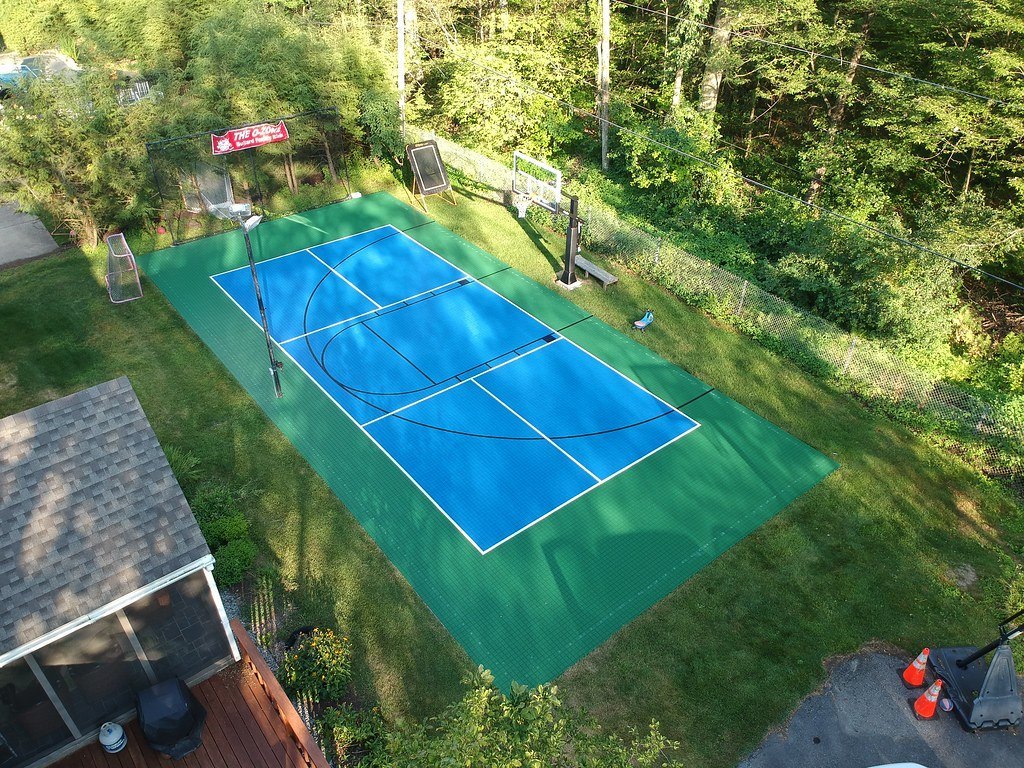
What Is Pickleball?
Pickleball is a paddle sport that combines elements of tennis, badminton, and table tennis. It can be played indoors or outdoors on a court roughly the size of a badminton court, with a slightly lower net. The rules are simple to learn, the game is quick to pick up, yet it offers enough strategic depth to satisfy players of all ages and fitness levels.
Key points in this article are based on publicly available official USA Pickleball materials and rewritten in English; specific specifications and rules are subject to the latest official documents.
A Brief History of Origins
- 1965 — born on Bainbridge Island, Washington State, USA.
- Invented by Joel Pritchard, Bill Bell, and Barney McCallum to keep their children entertained — they improvised with ping-pong paddles, a plastic wiffle ball, and a lowered badminton net.
Court and Equipment
- Court: same dimensions for singles and doubles — 20x44 feet (6.10x13.41 m); net height 36 inches (0.914 m) at the sidelines, 34 inches (0.864 m) at the center; a 7-foot (2.13 m) non-volley zone (NVZ), also called the "kitchen," runs along each side of the net.
- Paddle: made of hard, non-compressible material.
- Ball: a plastic ball with 26-40 round holes; indoor and outdoor balls differ in design.
- Paddles and balls used in official competition must meet USA Pickleball specifications.
Court and equipment data: see the Construction Guide and Dimensions Reference.
How to Play — Core Rules Overview
- Serve underhand diagonally into the opponent's service area.
- Double-bounce rule: after the serve, each side must let the ball bounce once before volleying.
- Traditional scoring: only the serving side scores; games are typically played to 11 points, win by 2 (tournaments may use 15 or 21).
- No volleying inside the non-volley zone (kitchen).
Full rules: USAP Rules Guide.
Why It Is So Popular — Who Is It For
- "Easy to learn, hard to master" — accessible to all ages and fitness levels, with a strong social element.
- Rapid global growth in recent years (including Asia and China) has driven demand for courts in schools, communities, commercial venues, and tournaments.